
 ME
MEWhy Every SMB Needs a Business Continuity Plan
Unexpected disasters can shut down your business in minutes. Learn why small and mid-sized businesses need a Business Continuity Plan (BCP) and how to start building one today.

Unexpected disasters can shut down your business in minutes. Learn why small and mid-sized businesses need a Business Continuity Plan (BCP) and how to start building one today.
Artificial Intelligence (AI) is revolutionizing cybersecurity by scanning for threats faster, detecting patterns humans might miss, and flagging unusual behavior in real time. But here is the truth that too many small and midsize businesses (SMBs) overlook: AI alone is not enough to keep you safe.
Relying solely on AI without a broader security strategy can create dangerous blind spots, especially with today’s evolving threat landscape. Let’s break down why.
AI tools are transforming how small and mid-sized businesses operate, from automating tasks to enhancing customer experiences. But with great efficiency comes great responsibility.
Before you integrate any AI tool into your workflows, it’s critical to assess its impact on your cybersecurity. One overlooked vulnerability could compromise your entire business.
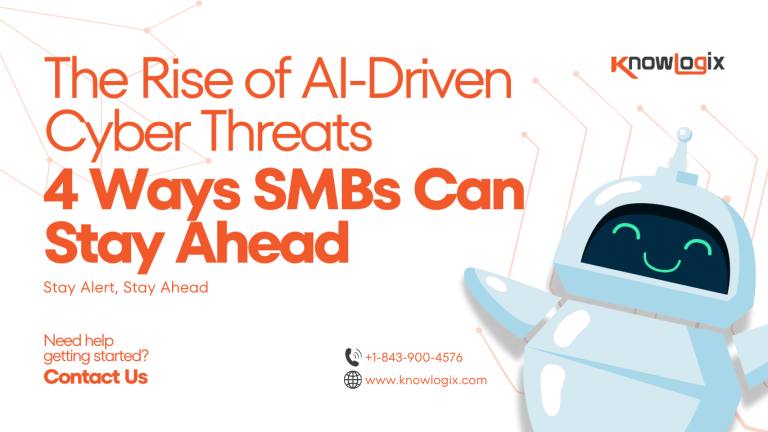
Artificial Intelligence is transforming the cybersecurity landscape—and not just for the better. While AI offers powerful tools for defense, cybercriminals are also using it to launch faster, more convincing, and more damaging attacks.
For many small and mid-sized businesses (SMBs), achieving compliance with regulations like GDPR, HIPAA, or PCI DSS feels like the finish line for cybersecurity. While compliance is an important milestone, it is not the same as complete protection.
Compliance can feel overwhelming for small and mid-sized businesses (SMBs). Regulations like GDPR, HIPAA, or PCI DSS may seem built for large corporations with big budgets and full-time compliance teams. But the reality is that SMBs face the same legal responsibilities and the same cybersecurity threats.
The good news is you can build a strong compliance foundation in just 30 days by breaking the process into manageable steps. Here is your week-by-week roadmap.
For small and mid-sized businesses (SMBs), compliance is not just a legal requirement. It is also a critical part of protecting data, building customer trust, and avoiding costly penalties. Yet many SMBs unknowingly leave gaps in their compliance strategies that cybercriminals and auditors can exploit.
In 2025, regulations are tightening, and the threat landscape is evolving. Eliminating these common mistakes now will put your business in a stronger position for the year ahead.
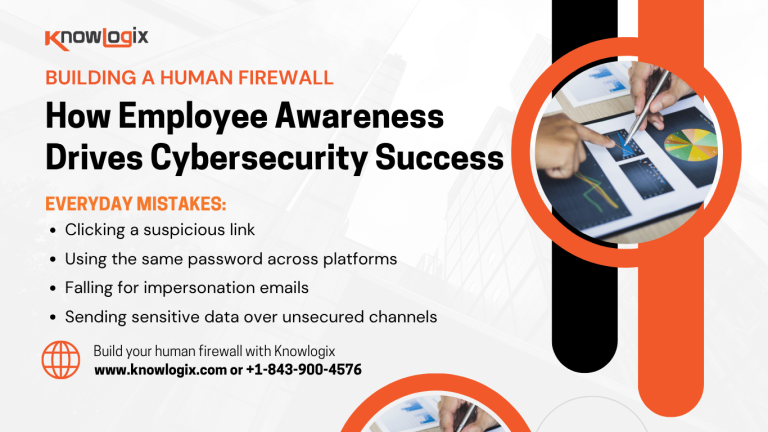
In today’s modern workplace, cybersecurity can no longer live solely within the IT department. While technology like firewalls and antivirus software are critical, they are no longer enough on their own. The real game-changer in cybersecurity? Your people.
In today’s fast-paced digital world, cybersecurity is often seen as a necessary expense like a box to check, a risk to minimize, or a problem for the IT department to solve. But forward-thinking businesses understand that prioritizing security is not just about protection. It’s a strategic move that creates long-term value and unlocks real competitive advantage.
In today’s hyper-connected world, business continuity isn’t just about weathering storms or power outages. It’s about surviving the digital threats that can bring your operations to a screeching halt.
Cybersecurity is no longer a tech issue. It’s a core part of your business continuity strategy.